
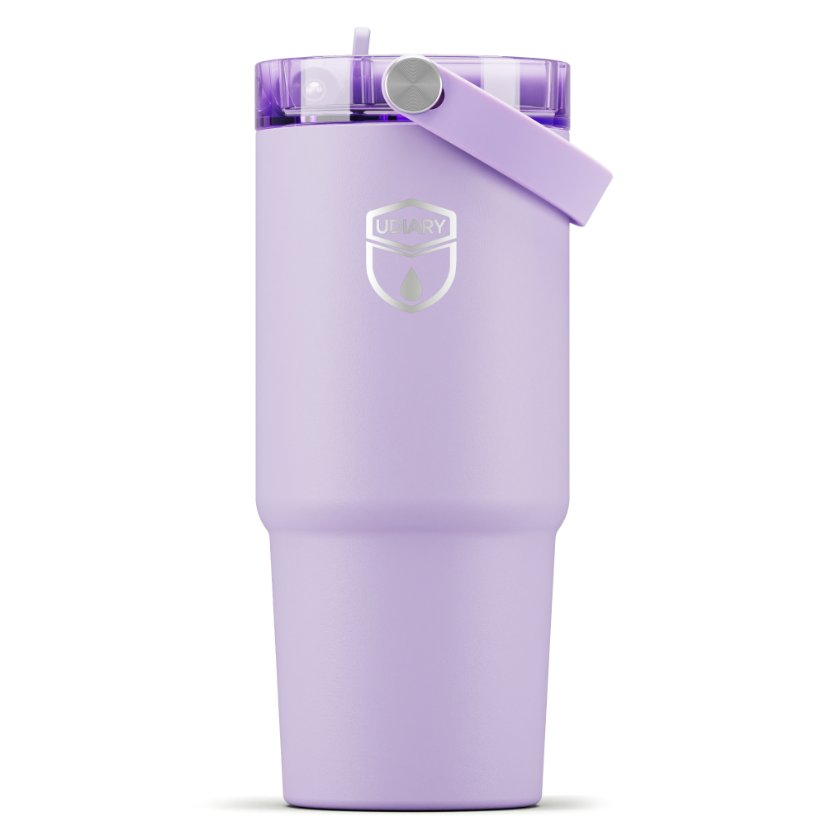
For a bottle RFQ, identify the offered body, lid and drinking arrangement together, then ask the supplier to state the included components. Use the actual catalogue item and a labelled sample reference. A visible spout or carry element does not establish what is removable, separately supplied or interchangeable with another item.
Locate the exact bottle before discussing parts
UDcup lists a product under the catalogue name UDlARY Snap-Spout 24/30 oz Insulated Water Bottle. Treat the whole name as a supplier reference for finding the item. Its capacity and insulation wording are not independently verified here. The official image shows a lilac body, a lid, a visible spout and an angled carry element, which are useful features for identifying the pictured reference.
Send the actual product URL and an uncropped image with your enquiry. Ask the supplier to confirm the item it proposes to quote, including a supplier code if one is available. If it offers another version, request a separate reference. Similar colour or a shared catalogue family name should not be used as a substitute for a clear item match.
Ask what the offered unit contains
Request a component list for the supplied unit. Start with the body and lid, then ask the supplier to name any drinking, carrying or other parts relevant to its particular offer. Do not assume that a visible part is removable, that a loose accessory is included, or that a replacement component can be ordered separately.
A photograph is also insufficient to determine whether two lids fit the same body. If the purchase needs an alternative lid or a spare part, ask the supplier to identify the exact proposed combination and the evidence it can provide. Keep the answer separate from the ordinary complete-unit quotation so purchasing staff do not accidentally compare different scopes.
Use one component confirmation table
The table is a request for information, not a prefilled specification. A supplier can mark a field as not applicable and explain why. An unanswered question should remain open rather than becoming an assumed inclusion.
RFQ field | Buyer reference | Supplier confirmation
Complete unit | Actual catalogue URL | Quoted item identity
Lid and drinking arrangement | Marked reference image | Offered version and included parts
Carry element | Visible element if relevant | Supply and attachment scope
Loose or replacement parts | Separate enquiry line | Availability and matching item if offered
Sample | Unique reference label | Which proposed unit it represents
Label the sample and its review boundary
If a sample is supplied, list what is physically present and connect it to the supplier item reference. Record any separate piece in the package and ask whether it belongs to the quoted unit. This gives the buyer a factual record without inferring removability or assembly instructions from the appearance of the sample.
Keep operational or performance requirements in their own enquiry fields. A visible lid does not prove leak resistance, thermal performance, cleaning suitability or food-contact compliance. Where such a requirement matters, ask for product-specific documentation and an agreed review method. A component identification sheet alone should never be described as approval of those properties.
Reconcile the quotation before ordering
Check that the quotation, sample label and component response describe the same unit. Ask the supplier to acknowledge the agreed scope in writing. If an offer includes an alternative colour or lid arrangement, record that difference before approving it. Do not allow an updated picture to silently change the supply description.
For a repeat purchase, reference the previous confirmed unit and ask whether the current proposal is unchanged. Retain the original response alongside any later change notice. This keeps a small procurement question manageable: the receiving team can check whether the supplied unit matches the named offer, while technical suitability and commercial terms remain separately documented.
Receiving staff should use the same component names as the supplier acknowledgement. If a package contains something described differently, request clarification before classifying it as missing or substituted. Preserve that answer with the sample record so a later order does not inherit an unresolved interpretation.
• Identify the complete unit before asking about spare parts.
• Keep included parts separate from optional or unconfirmed components.
• Record each approved alternative against its own item reference.
Frequently asked questions
Does a visible spout establish a removable part?
No. Ask the supplier how the offered arrangement is supplied and identified. The image helps locate the item but does not establish disassembly, replacement or compatibility.
Can the catalogue capacity become a verified specification?
Treat it as supplier naming until the applicable product description and measurement basis are confirmed. Do not infer usable volume from a photograph or from a shared family name.
What should a sample approval say?
State the sample identity and the aspects actually reviewed. Keep missing component answers and any technical requirements open until the relevant supplier confirmation or evidence is available.
Product and contact references
Catalogue reference: confirm matching item: https://udcup.com/product/product-7/
Related catalogue reference: https://udcup.com/product/product-5/
Contact UDcup: https://udcup.com/contact/
UDcup blog: https://udcup.com/blog/