
For a handled-tumbler RFQ, ask the supplier to define the item counted as one supplied unit and describe the proposed packing around it. Keep the product, any separately supplied pieces and the packaging lines distinct. A catalogue photograph of a complete-looking tumbler does not establish retail-box contents, carton quantities or accessory inclusion.
Start with the handled catalogue item
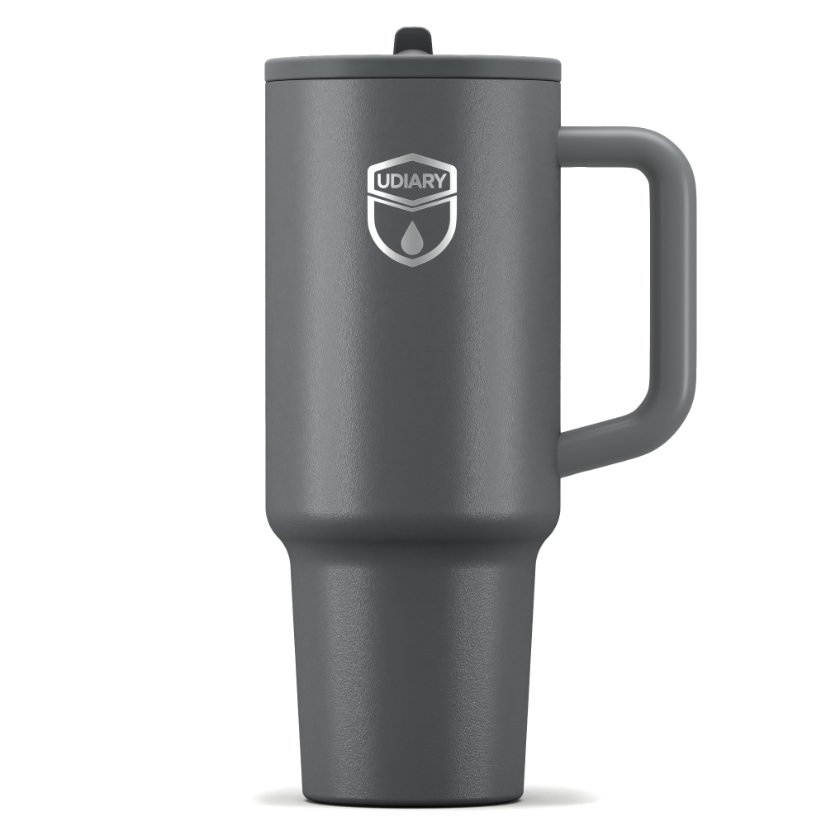
UDcup lists a product named UDlARY Snap-Spout 40 oz Insulated Tumbler with Handle. Its official image shows dark handled drinkware, a lid and an original front marking. Use that catalogue name to locate the item, while treating its capacity and insulation terms as supplier labels pending order-specific confirmation.
The packing enquiry should reference the actual product URL and the proposed item identity. Ask the supplier to confirm the version it will quote. Similar handled products can have different appearances and supplied arrangements, so a generic description such as handled cup is insufficient when purchasing staff need to reconcile a quotation, sample and packing list.
Define the supplied unit before counting packages
Ask what counts as one unit in the quotation. Request a written description of the body, lid and any other supplied pieces. If the supplier proposes a separately packed component, identify it on its own line and ask how it relates to the main unit. Do not assume that a visible lid means every optional accessory is included.
Then ask what packing forms the supplier actually offers for that unit. An individual package, a shared package or a separate component package should be described only if the supplier proposes it. Keep package materials, protection features, dimensions and quantities as confirmation questions; the product image provides no evidence of those packing details.
Collect the packing answers in a comparison table
Use the table as an enquiry structure. It separates the commercial count from the physical packages and helps the receiving team understand the expected relationship. Leave unavailable answers open instead of filling them with typical industry assumptions.
Packing field | Question to supplier | Buyer review
Quoted unit | What exact item is counted once? | Match product identity
Included pieces | What accompanies that unit? | List each confirmed piece
Individual packing | What is proposed around one unit? | Record actual description
Outer packing | How are those units grouped? | Request confirmed quantity basis
Identification | What links packages to the item? | Match packing list and labels
Use a sample package for identification
If a sample package is offered, ask the supplier to state whether it represents the intended order packing or is only a sample-shipping arrangement. Record the answer with the photographs and item reference. A parcel used to send a sample should not automatically become the approved commercial packing specification.
List the contents actually received and compare them with the supplier response. If something is packaged separately, record how it is identified. This review can establish an understandable contents record, but it does not verify transport protection, stacking strength, product safety or performance. Any required assessment needs its own agreed scope and evidence.
Reconcile quantities and labels before ordering
Once the supplier provides a packing proposal, check that the item count and package count use consistent definitions. Ask the supplier to explain any difference between a quotation quantity, an individual-package quantity and an outer-package quantity. Do not infer one from another without that relationship being stated.
For a repeat order, reference the previous confirmed item and packing record, then ask whether the proposal is unchanged. If either changes, request an updated list rather than carrying forward an old quantity assumption. Receiving staff can then check the delivered packages against explicit records, while unresolved packing or component questions remain visible to the purchasing team.
Keep any buyer label request separate from the supplier standard packing description. Ask whether the request is available and obtain the proposed wording or layout for review. A catalogue logo or a finished product photograph does not establish what will appear on an individual box or an outer carton.
Before accepting a packing list, ask the supplier to reconcile any bundled or separately shipped piece with the defined commercial unit. A component can appear in a different package without necessarily representing another complete unit. Conversely, a package count alone does not establish its contents. The written relationship should be understandable to a receiving colleague who has not seen the catalogue image or participated in the original enquiry.
• Confirm the supplied unit before discussing package counts.
• Distinguish sample-shipping packing from proposed order packing.
• Retain the supplier acknowledgement of contents and quantity relationships.
Frequently asked questions
Does a handled-tumbler photo show the retail packing?
No. Request the actual packing proposal and contents list. The product image identifies the catalogue reference but does not demonstrate a box, protection method or carton quantity.
Can a sample parcel define the order packing?
Only if the supplier explicitly confirms that relationship and the buyer reviews it within the agreed scope. Otherwise describe it as sample-shipping packing and keep the commercial packing question open.
What if quotation and carton quantities differ?
Ask the supplier to state the relationship using the same defined unit. Keep the written clarification with the order documents rather than resolving the difference through an assumed standard packing quantity.
Product and contact references
Catalogue reference: confirm matching item: https://udcup.com/product/product-5/
Related catalogue reference: https://udcup.com/product/product-7/
Contact UDcup: https://udcup.com/contact/
UDcup blog: https://udcup.com/blog/